

Jolena Ma on building content systems, staying curious, and leading with clarity
Jo joins Lead with Tempo's Day by Day podcast to talk content systems and what AI is changing for content designers.
Our co-founder Jolena Ma sat down with Tempo's Rachel McConnell for an interview on their podcast, Day by Day. They chatted about Ditto's origin story, what AI is changing for content designers, and the leadership advice that's shaped how Jo runs her team.
Here's what she covered.
AI has raised the stakes, but the core challenge remains
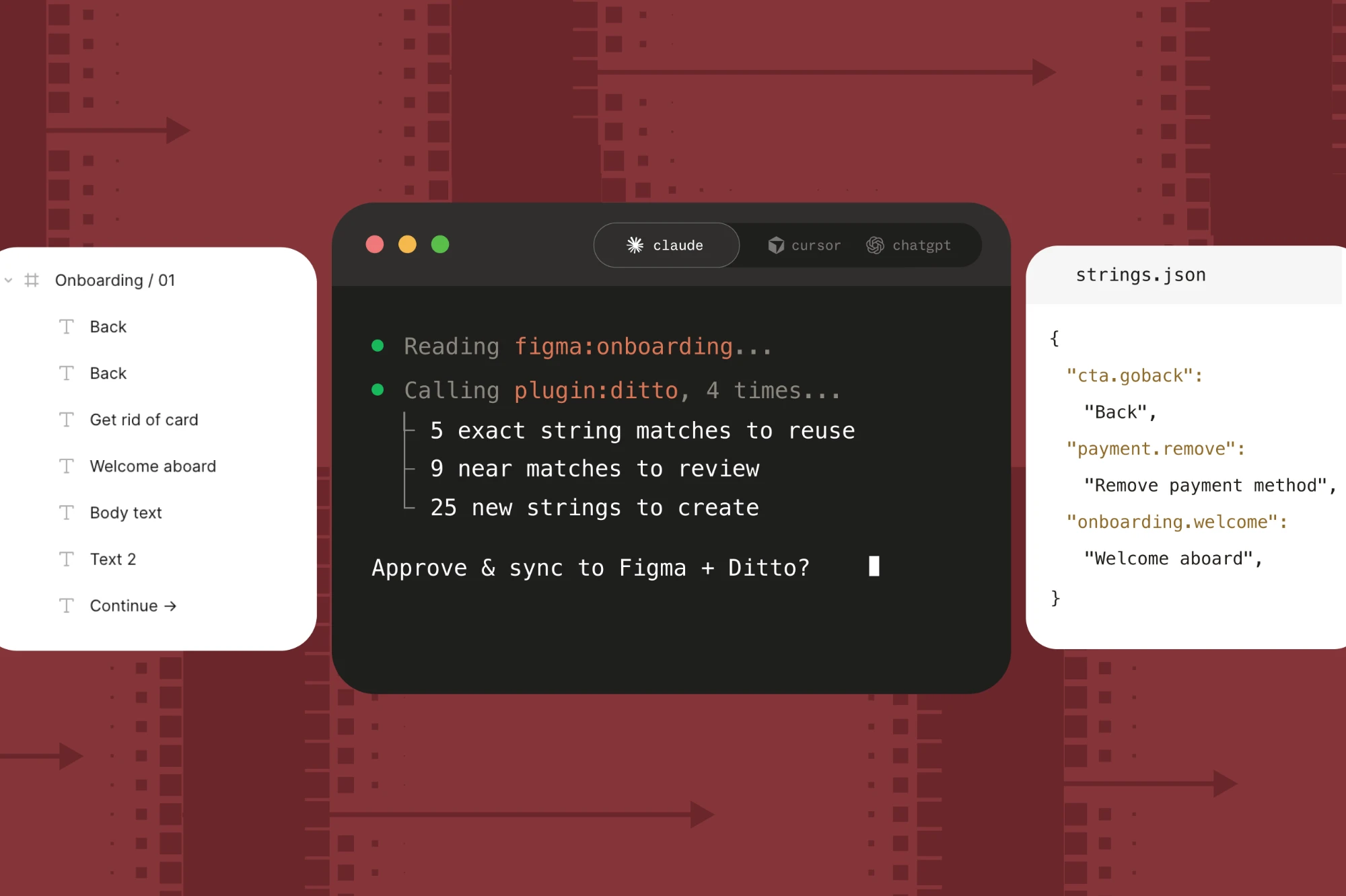
Jo hears the same tension from content designers across every industry, seniority, and geography she talks to: AI has made it easy to generate a first draft that looks “good enough.” That's moved a team's focus to systems — documented patterns, reusable text — because when AI creates more, content designers need to do more just to keep up.
But building that system takes time most content designers don't have.
"They know they need to build the system to create more leverage for themselves, but they still have a lot of day-to-day work... If you are one content designer supporting 20 or even 10-plus designers, it's very hard to say, OK, I'm actually going to stop doing that for the next month so I can build a system."
The regional flavor of content design work varies. Jo's noticed that content designers in Asia tend to work closer to the codebase, sometimes touching strings directly in development, while London has a strong concentration of localization specialists. But the underlying need to build systems is global.
The opportunity: Reshaping workflows with AI
Most teams are rebuilding their workflows right now because AI has changed how design and engineering collaborate. This provides an opportunity for content designers to scale themselves and their impact.
"If we're rebuilding these workflows anyways, how do we make them work better for content too? How do we make the right terminology and the patterns and the guidance available at the moment someone is creating something?"
Jo’s advice for content designers who want to be positioned for what's next is to get curious about the foundational work already happening around you. Design systems getting revamped. Designers and engineers collaborating in new ways. Whoever understands those shifts early can build content into the foundation, rather than trying to catch problems after the fact.
The best leadership advice Jo's received
When Rachel asked what leadership advice Jo could share, she focused on providing clarity:
"If I'm able to give a really strong North Star... people are the best at what they are the best at, and they're able to come in and figure out where they can add value. And I've seen moments where if I've micromanaged too much, it doesn't work out nearly as well."
Jo explains that when she sees her team confused or unsure where to go next, it’s often a reflection of ambiguity in her own thinking. The takeaway for leaders? Provide your team with a strong mission statement and a clear understanding of the problem you’re trying to solve.
Listen to the episode
Check out the full episode for more, including what a normal work day looks like for Jo as the co-founder of a content design startup.
Latest