


Ditto is a content system for product text — a single source of truth for the words in your product, plus the standards and context that govern them.
It helps product teams generate, review, and ship copy with control and confidence across Figma, code, GitHub, and agentic tools, even as AI increases the volume and velocity of what gets written and shipped.
Built for modern product teams shipping fast across complex surfaces, Ditto brings structure to product copy — so quality, consistency, and governance aren’t left to chance.
Ditto is your hub for approved product copy, terminology, style rules, and context. The system is always current, usable, and shared (not scattered across style guide PDFs, spreadsheets, and markdown files).
Use Ditto where you build: in Figma, in your codebase, and in agentic tools like Claude Code and Cursor. Your standards travel with the work, so you’re not re-implementing “how we write” in every new workflow.
Ditto supports review workflows (owners, statuses, comments, audit trails) and adds enforcement checkpoints (like PR copy checks) so teams can stay in control of what ships — without slowing down delivery.
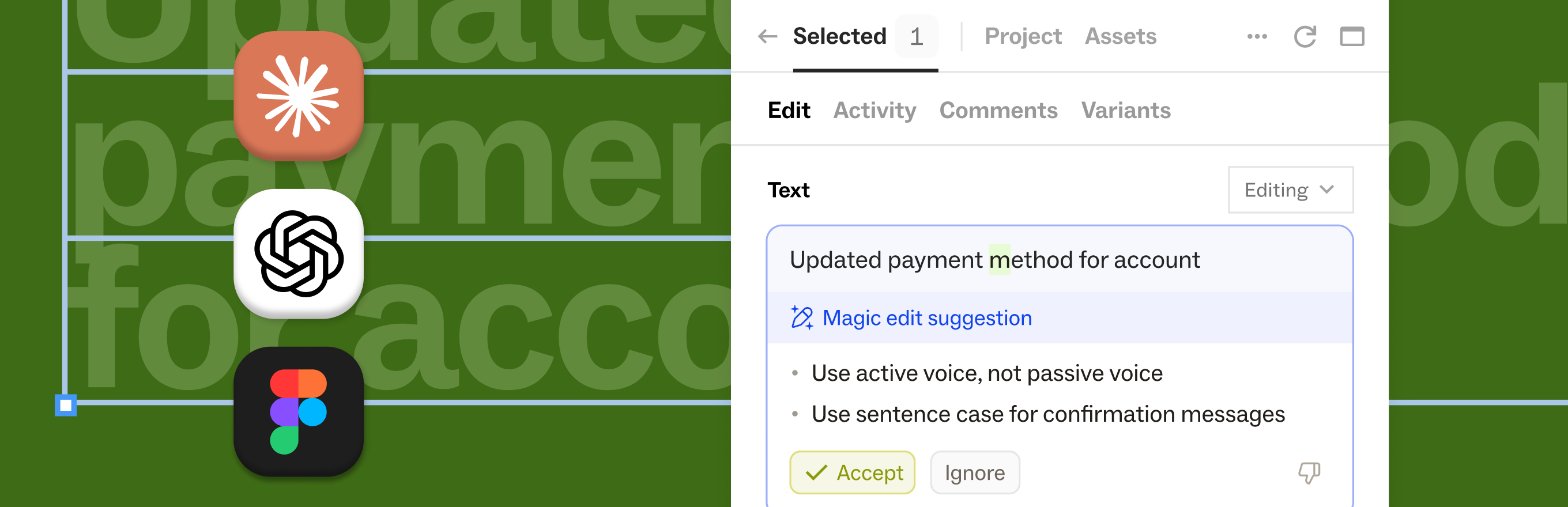
Ditto is for product teams who treat copy as a critical part of the product experience — and need infrastructure to keep it consistent, compliant, and scalable as they ship faster.
Most teams are trying to patch the same problem with a frankenstein stack: PDFs, spreadsheets, scattered prompts, and one-off AI “fixes” that help in the moment. But these solutions don’t scale, don’t stay current, and don’t give you visibility into what’s actually shipping.
Ditto closes that gap by making product copy a real system: centralized, integrated into the workflow, and able to enforce the standards you set, meaning you can move fast without gambling on quality.
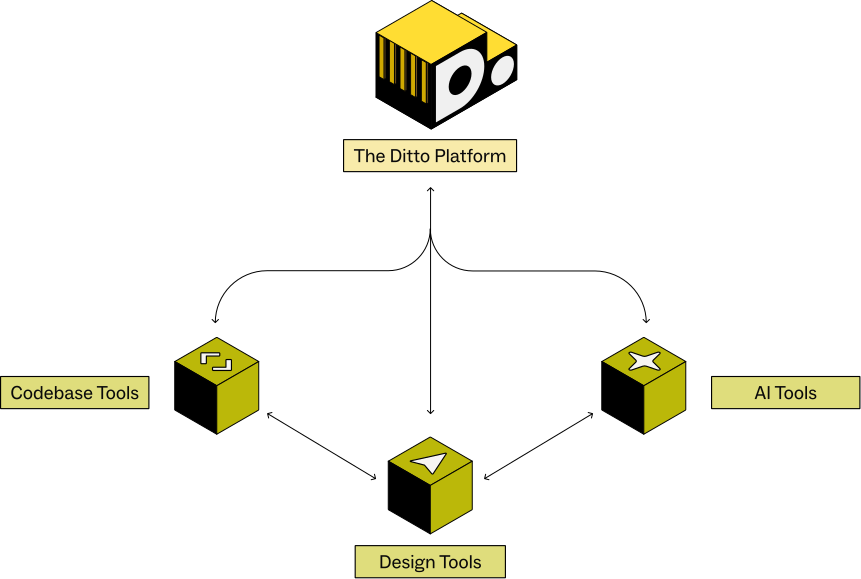
Ditto was built by Jessica Ouyang and Jolena Ma for a simple reason: product teams care deeply about quality, but the way we ship product text has never had the same infrastructure that design and engineering take for granted.
As product development gets more iterative — and more influenced by AI — teams are writing more copy. But they’re also shipping it faster, across more surfaces, with more risk when standards slip (compliance, accessibility, brand trust, usability).
Ditto exists to make product copy feel less like a constant scramble and more like a dependable system: one place to build your standards, reuse what works, and stay in control of what reaches users, no matter how your workflow changes next.

Co-founder
Jessica Ouyang is the CEO and co-founder of Ditto, where she leads the company’s product and vision for helping teams manage product copy from design to deploy.

Co-founder
Jolena Ma is a co-founder of Ditto, where she leads the go-to-market team and partners with customers to help them get the most out of their content workflows.
Product copy is product infrastructure. If teams want to move fast and earn user trust, the words can’t be treated like last-minute strings. They need a system as rigorous as the rest of the stack.