

Ditto's onboarding automates setup, with a single agent setup prompt. Build a content system and connect it to your AI tools, in minutes.
Product teams have brought systems to the other core building blocks of product development. Your UI components live in a design system. Your code lives in a repo with structure and history behind every line. Product copy hasn't gotten the same treatment — it's the last layer still held together by habit, memory, and whoever wrote the last version of a string.
Setting up a new Ditto workspace now fixes that, in one step.
Most teams manage copy the same scattered way: a style guide in a doc somewhere, approved strings in a spreadsheet, a few rules some people remember and nobody else does. It works, sort of, until AI-assisted workflows start touching and generating copy faster than a person can track by hand.
Markdown files, a custom skill, a one-off agent instruction — these are a good start. But a real content system gives you connection, traceability, and control no matter what team, or what tool, is doing the writing.
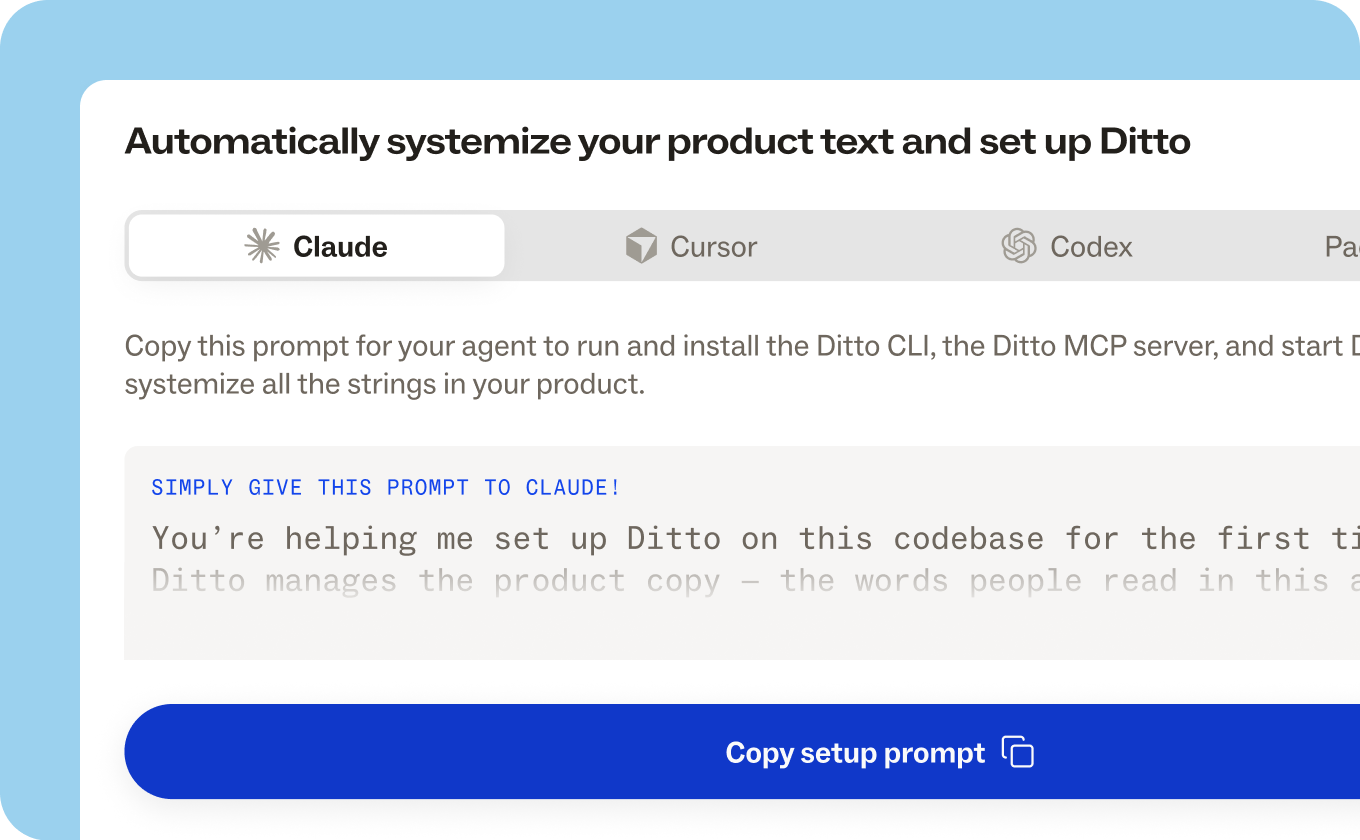
Setting up a system used to mean two separate efforts: building it, then separately wiring it into the tools your team actually writes in. Ditto's new workspace setup collapses that into one prompt, run once when you create a new workspace. It does two distinct jobs:
Job 1 — it builds your system. Ditto Scan combs through your live codebase and turns what's already there into a working content system: strings that repeat become a component library, translations you've already shipped become variants, and the voice, tone, and terminology in your production copy becomes a first draft of your style guide.
Job 2 — it puts that system to work in your AI tools. The same prompt installs the Ditto CLI, connects your agent to the Ditto MCP, and installs the Ditto Agent Package — the built-in review and audit skills that check your system automatically. This means AI agents will use the system you’ve built in Ditto reliably, every time.
Here’s what you can do in your first session in Ditto, all from a single prompt:
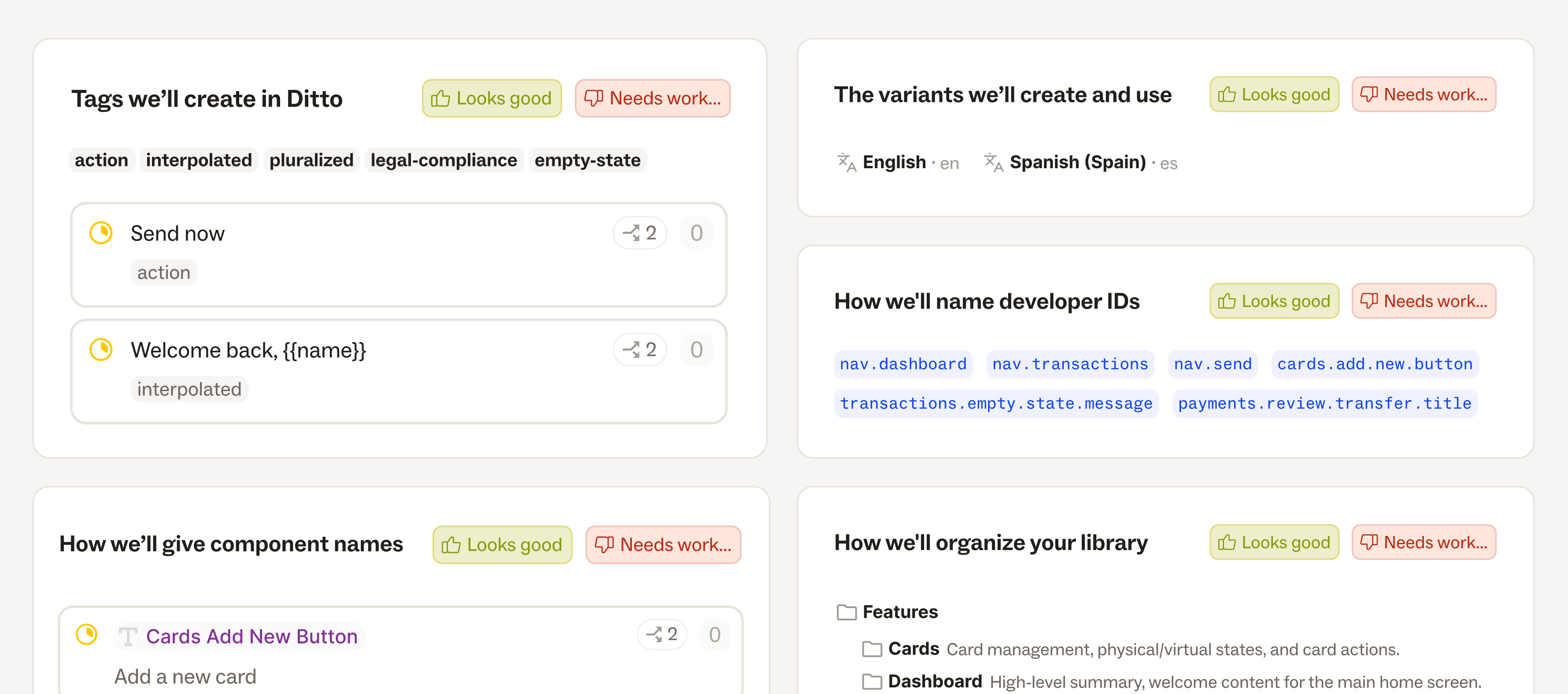
Watch a video of Ditto Scan building a first version content system live.
And while the system itself is taking shape, the same prompt is hooking it up to your agent tools:
A Ditto workspace where the system is both built and already in use:
One prompt, one new workspace, and both jobs are already done. Run Ditto's new onboarding in your own Ditto workspace →
.png)